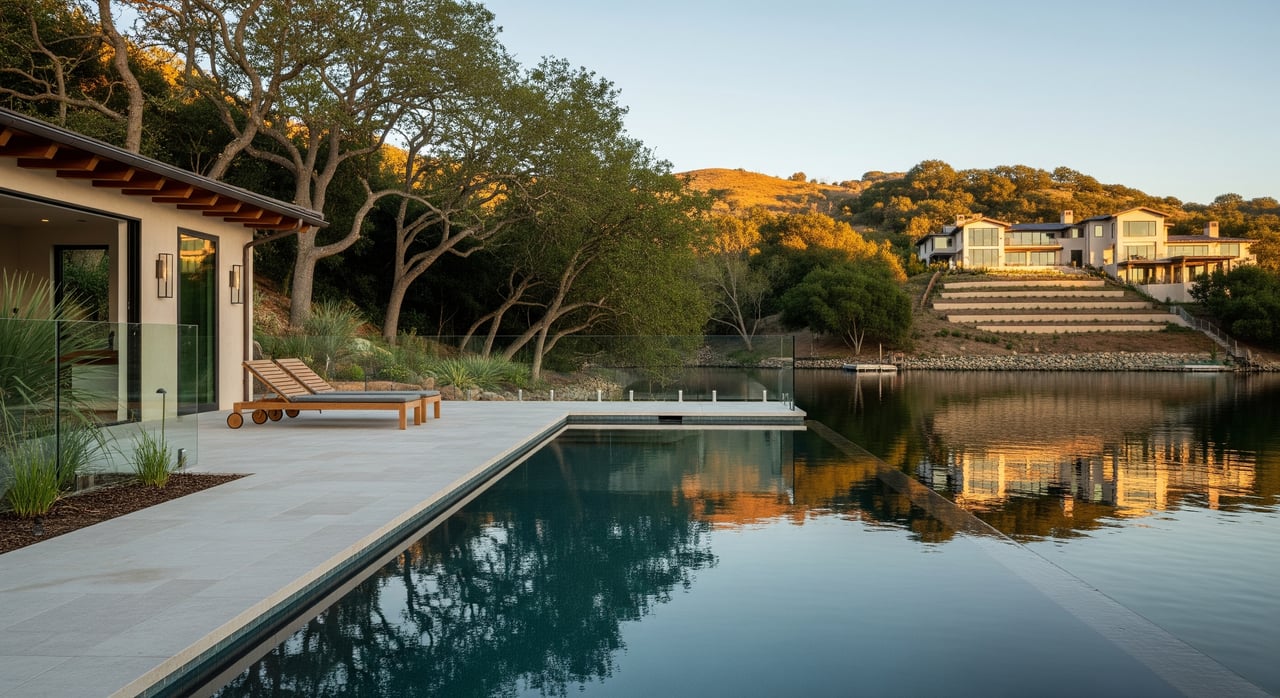
Are you picturing sunrise paddles from your private dock or sunset views from a quiet hilltop terrace? In Lake Sherwood, both visions are possible, and each comes with unique benefits, costs, and responsibilities. Choosing between waterfront and hillside is not just about the house. It is about how you want to live day to day and what you are comfortable maintaining over time.
This guide breaks down lifestyle trade-offs, market and insurance considerations, and the due diligence you should plan for in Lake Sherwood. You will come away with a clear path to decide what fits you best and how to prepare as a buyer or seller. Let’s dive in.
Lake Sherwood overview
Lake Sherwood is a private residential community centered on a reservoir and a country club. You will find true lakefront homes with docks and elevated hillside estates with sweeping lake and mountain views. Property characteristics and rules can vary by parcel, so it is important to confirm community boundaries and HOA or club guidelines before you commit.
For accurate details on a specific address, plan to review county records, HOA CC&Rs, and any lake-use or dock regulations. Because Lake Sherwood is a high-end market with lower sales volume, pricing and timelines can vary more than in larger suburban areas. Local comps and recent sales of similar properties are essential.
Waterfront living: what to expect
Lifestyle and daily rhythm
If you want direct access to boating, paddling, or lakeside entertaining, waterfront living delivers. The atmosphere can feel like a private resort. Many lakefront homes have smaller yards but put you right on the shoreline with immediate water access.
Day to day, you may notice seasonal water-level changes and occasional increases in insects near the water. When the lake is calm, the setting is serene and private. The water becomes part of your routine, from morning coffee on the dock to evening cruises.
Maintenance and logistics
Waterfront ownership usually includes caring for a dock and any shoreline structures. You will want to understand who maintains the dock, what permits are on file, and what the HOA allows for construction or replacement. Ask about water-quality management, boating rules, and any motor-size limits.
Even if a property sits outside mapped flood zones, lenders and insurers will consider the overall exposure of a home at the water’s edge. Budget time to confirm the FEMA flood zone, ask about historical high-water events, and review any shoreline erosion records.
Who it fits
Waterfront tends to fit buyers who prioritize daily water access, entertaining, and a strong vacation-home feel. If you are comfortable with specialized upkeep and possible higher insurance or maintenance costs, lakefront living can deliver a unique lifestyle and a compelling sense of place.
Hillside living: what to expect
Lifestyle and day-to-day
Hillside homes trade dock access for panoramic views, privacy, and breezes. Many are custom estates designed to capture sunrise or sunset outlooks. You will generally see fewer mosquitoes and lower exposure to water-related issues.
Everyday life may include navigating a steeper driveway and tending to hillside landscaping. You might also benefit from more sun exposure, which can be great for outdoor living areas and potential solar setups. The overall feel is calm, elevated, and oriented to the scenery.
Maintenance and logistics
Hillside ownership often involves attention to drainage, slope stability, and retaining structures. You should plan for periodic inspections, vegetation management, and, where applicable, adherence to defensible-space requirements in higher wildfire hazard areas.
Access and emergency egress deserve a close look. Confirm turning radii for larger vehicles and evaluate driveway grade, especially if you expect frequent guests or service providers. If future improvements are on your list, check grading permit histories and engineering records early.
Who it fits
Hillside homes suit buyers who value views, privacy, and lower water-related maintenance. If you want a larger lot or the ability to design around vistas, an elevated property is a strong match. This option often appeals to long-term residents who see the view as the primary investment.
Market and money: key differences
Prices and resale dynamics
In lake communities like Lake Sherwood, true waterfront homes commonly command a premium over comparable non-waterfront properties. The exact price gap can vary widely based on dock rights, lot size, and micro-location on the shoreline.
Because Lake Sherwood is a niche luxury market with limited turnover, valuations rely heavily on the most similar recent sales. Expect wider price ranges and, at the top end, potentially longer marketing timelines. If you are buying or selling, a property-specific comparable analysis is essential.
Insurance and ongoing costs
Waterfront properties may require specialized insurance for docks and increased liability coverage. Flood insurance needs depend on flood zone status, the lake’s management, and lender requirements. Even if the FEMA zone is favorable, insurers will still assess the property’s context at the waterline.
Hillside properties may face higher wildfire exposure, slope or landslide risk, and potential expenses for erosion control or retaining-wall upkeep. Earthquake risk is statewide, so consider separate earthquake coverage. For both property types, include HOA or club dues, landscaping, and property taxes in your annual budget.
Financing and appraisal
Unique collateral can trigger specialty appraisals and stricter lending criteria. Waterfront features, such as docks, are not always treated as standard collateral. Ask your lender how they view these elements and whether higher down payments or specific appraiser expertise will be required. Hillside estates with extensive custom work may also need appraisers familiar with view valuation and site improvements.
Risk and rules: what to verify
Core checks for any Lake Sherwood home
- Title and easements, including any shared driveways, utilities, or recorded lake-access rights.
- HOA CC&Rs and rules that govern exterior changes, dock construction and use, and rental policies.
- Recent surveys and legal descriptions to confirm boundaries and any encroachments.
- Recent comparable sales of similar property types.
Waterfront due diligence checklist
- Dock condition, permits, approvals, and who is responsible for maintenance or replacement.
- Lake operations, including water-level management, water quality, and boating rules.
- Flood exposure, FEMA flood zone status, and any local history of high water or shoreline erosion.
- Environmental limits near the water, such as setbacks or restricted work areas.
Hillside due diligence checklist
- Geotechnical evaluation for slope stability, soil conditions, and drainage recommendations.
- Grading and retaining-wall permit history, plus engineering records for prior work.
- Access and emergency egress, including driveway grade and turning radii.
- Wildfire exposure, defensible-space status, and vegetation management obligations.
The right team for specialized properties
Consider assembling a team with direct lakeside and hillside experience:
- A licensed home inspector who has evaluated both dock-adjacent and hillside homes.
- A structural engineer for foundations, retaining structures, or visible concerns.
- A geotechnical engineer for slope analysis and future project planning on hillside lots.
- A dock or marine contractor to assess dock integrity and safety.
- An arborist for trees near structures or on slopes.
- A title company and, if needed, a real estate attorney for easements, riparian rights, and CC&R interpretation.
- An insurance broker experienced with high-value homes and wildfire, flood, and earthquake coverage.
Selling strategy: highlight the right value
For waterfront sellers
- Emphasize the dock’s functionality, shoreline condition, and the ease of water access.
- Provide maintenance records for docks and shoreline structures, plus any equipment details.
- Proactively address buyer questions with past insurance quotes, flood disclosures, and proof of permitted dock work.
- Use high-impact visuals, including water-level photography, drone footage, and twilight shots.
For hillside sellers
- Showcase unobstructed views, privacy, and outdoor living spaces designed around the scenery.
- Share geotechnical reports or summaries if available to reassure buyers about slope stability and drainage.
- Highlight wildfire-hardening measures and defensible-space compliance where applicable.
- Capture the vista with panoramic and twilight exterior photography.
Marketing assets that matter
- For waterfront: boat-in footage, dock close-ups, sunrise or sunset panoramas, and tasteful night lighting.
- For hillside: elevation maps or visuals that illustrate sightlines, plus twilight photos that reveal the lake and ridgelines.
- Keep lifestyle copy accurate about dock rights, easements, or shared facilities.
Decision guide: quick self-check
Ask yourself the questions below to clarify fit:
- Do you want daily access to the water or the long-term value of a panoramic view?
- Are you comfortable maintaining a dock and shoreline, or would you prefer to focus on landscaping and slope care?
- Would occasional insects and water-level variations bother you, or is wildfire exposure a larger concern?
- Is a steeper driveway acceptable for the privacy and elevation it offers?
- Which costs feel more predictable to you over 5 to 10 years: dock and shoreline care or drainage and retaining walls?
- For resale, does your ideal buyer profile look more like a boating enthusiast or a view-focused homeowner?
Next steps in Lake Sherwood
A smart plan will protect your time and budget. Use this checklist to move forward with confidence.
For buyers:
- Order a title report and confirm any dock, access, or shared-use easements attached to the parcel.
- Request HOA and club documents, including CC&Rs, lake-use rules, and meeting summaries if available.
- Hire specialists suited to the property type: home inspector, geotechnical engineer for hillside, and a dock inspector for waterfront.
- Review FEMA flood maps, Cal Fire hazard maps, and county permit histories relevant to your address.
- Ask a local agent for a property-specific comparable analysis, especially if features are unique or custom.
For sellers:
- Gather maintenance records for docks, seawalls, retaining structures, roofing, and drainage systems.
- Commission or update geotechnical or dock condition reports to support buyer confidence.
- Prepare clear disclosures about lake management, historical water levels, or slope-related improvements.
- Plan professional staging, photography, and targeted marketing that speaks to the right buyer profile.
When you are ready to compare specific homes or prepare a sale, a tailored plan and precise local comps will make the difference. For a confidential conversation and a step-by-step strategy, connect with Karen Sandvig. Request a complimentary home valuation, a buyer preview plan, or both.
FAQs
Do Lake Sherwood waterfront homes always include a private dock?
- Not always; dock rights depend on title, recorded easements, and HOA rules, so you should verify ownership and use in the title report and CC&Rs.
Are Lake Sherwood lakefront homes at higher flood risk?
- Flood exposure varies by FEMA flood zone, lake management, and local history, so confirm maps, ask about past high-water events, and review shoreline conditions.
Is wildfire a bigger risk for Lake Sherwood hillside homes?
- Hillside properties may be within higher wildfire hazard areas and often require defensible space, so check hazard maps and verify vegetation management measures.
Will a dock change my property taxes in Ventura County?
- Permanent dock structures can affect assessed value, so you should confirm potential tax impacts with the county assessor’s office.
Which has better resale value in Lake Sherwood: waterfront or hillside?
- It depends on recent comps and timing; waterfront can command premiums, while hillside appeals to view-seekers, so use property-specific analysis to gauge likely outcomes.