
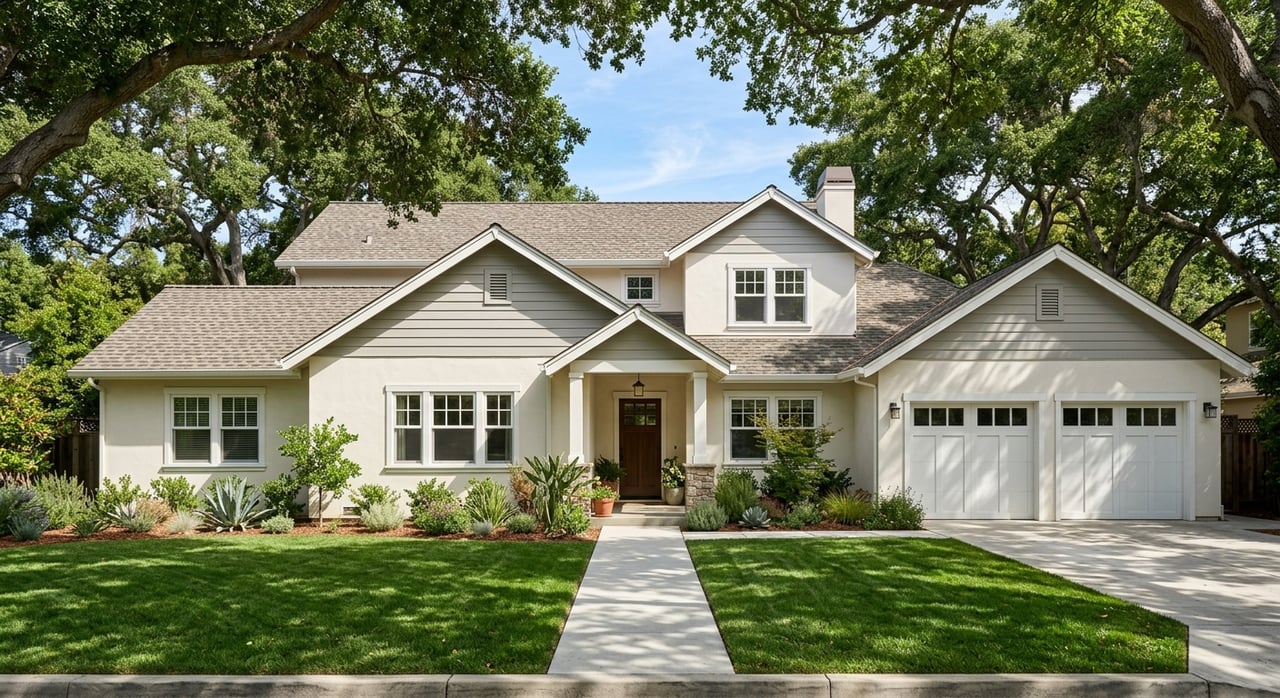
Thinking about trading your condo for a single-family home in Thousand Oaks? You are not alone. For many move-up buyers, the goal is simple: more space, more privacy, and a home that better fits your next chapter. The challenge is that upsizing changes more than your square footage. It changes your budget, your timing, and the neighborhoods that make sense for your lifestyle. This guide will help you think through the key numbers, local patterns, and planning steps so you can move with more clarity and less stress. Let’s dive in.
What Upsizing Looks Like in Thousand Oaks
If you are moving from a condo or townhome to a single-family home, Thousand Oaks offers a wide range of price points depending on where you focus your search. Recent market snapshots place Thousand Oaks in roughly a $1.0M to $1.15M median price range, with homes selling at about 98.7% to 99% of list price and median days on market around 37 to 44 days, according to Redfin’s Thousand Oaks housing market data and Realtor.com’s Thousand Oaks overview.
That big-picture number is useful, but it does not tell the whole story. Pricing can shift sharply by zip code. Realtor.com’s local overview shows 91360 at $949,000, 91320 at $998,000, 91307 at $1,125,000, 91362 at $1,314,500, and 91361 at $1,824,999. For an upsizer, that means your options can look very different depending on whether you want to stay closer to your current area, target a specific neighborhood feel, or stretch for a larger lot or premium setting.
Budget Beyond the Mortgage
One of the biggest mistakes move-up buyers make is focusing only on the new monthly mortgage payment. The Consumer Financial Protection Bureau points out that ownership costs also include property taxes, insurance, repairs, and any HOA dues that apply.
That matters in Thousand Oaks because single-family homes can reduce or eliminate some condo-style shared costs, but not always. The city’s HOA GIS data shows that Thousand Oaks includes both attached-home associations and HOA-governed single-family neighborhoods, including communities such as Dos Vientos Ranch, Lynn Ranch, and Braemar North Ranch. In other words, moving into a detached home does not always mean moving out of HOA dues.
Key costs to compare
Before you make the move, compare your current condo budget against the likely costs of a single-family home in these categories:
- Mortgage payment
- Property taxes
- Homeowners insurance
- HOA dues, if any
- Repairs and maintenance
- Utilities
- Yard or exterior upkeep
This side-by-side view often gives you a more realistic answer than a simple online payment calculator.
Property Taxes and Loan Limits Matter
In Thousand Oaks, property taxes can be a meaningful part of your monthly housing cost. Ventura County’s 2025-26 primary tax rate area for Thousand Oaks ranges from 1.041% to 1.1719%, according to the County of Ventura tax rate statistics. On a $1.0M home, that works out to roughly $10,400 to $11,700 per year in base property tax before special assessments.
Financing can also shift as you move up in price. Ventura County’s 2026 one-unit conforming loan limit is $1,035,000, according to the FHFA county loan limit list. If your loan amount goes above that threshold, your purchase may move into jumbo territory. The CFPB notes that understanding the limit helps you see when a home may require a jumbo loan.
Why this matters for condo owners
If you have built substantial equity in your condo, you may still be able to stay within conforming limits with a large enough down payment. If not, you may need to evaluate jumbo financing options as part of your search strategy.
The practical takeaway is simple: your target purchase price is only part of the financing conversation. Your expected loan amount matters just as much.
Closing Costs and Cash Reserves
When you upsize, your down payment is only one part of the cash equation. The CFPB says buyers should expect closing costs of about 2% to 5% of the purchase price, excluding the down payment, and should also plan for prepaid items and escrow funds for taxes and insurance, as explained in the CFPB homebuying guidance.
You will also want to budget for moving expenses, any immediate repairs or updates, and a cash cushion after closing. A single-family home often comes with more maintenance responsibility than a condo, so keeping reserves matters.
Insurance is another line item to review early. The CFPB notes that lenders usually require homeowners insurance, and flood coverage is separate if the property is in a flood-risk area, according to the CFPB insurance overview.
Sell First or Buy First?
For many condo owners, this is the biggest question in the whole move.
The CFPB says that if you want to move, you normally try to sell your current home first before buying another one. That sequence often makes the most sense when you need sale proceeds for the next down payment and closing costs, as outlined in the CFPB mortgage readiness guide.
A sell-first strategy can help you:
- Know exactly how much equity you can use
- Reduce the risk of carrying two housing payments
- Set a firmer purchase budget
- Limit last-minute financing pressure
A buy-first approach may work in some situations, but it usually requires more liquidity and more risk tolerance. A bridge loan can sometimes help fill the gap. Chase’s bridge loan overview explains that these are short-term loans designed to bridge the period between selling one home and buying the next, but also notes that they are specialized and not ideal for most purchases.
Compare Lenders Early
If you are moving up in price, lender shopping becomes even more important. The CFPB recommends shopping with at least three lenders and comparing Loan Estimates because rates and terms can differ, as noted in the CFPB lender comparison guidance.
This step can help you compare:
- Interest rate
- Loan type
- Closing costs
- Cash-to-close requirements
- Whether your loan is conforming or jumbo
Later in the process, the CFPB Home Loan Toolkit explains that your Closing Disclosure arrives at least three days before closing. That is the key moment to verify your loan terms, escrow and prepaid items, and total cash needed to complete the purchase.
Neighborhood Fit Is Everything
Thousand Oaks is not a one-size-fits-all market. The city’s zoning and specific plan GIS map identifies areas including Dos Vientos, Lang Ranch, Westlake North Ranch, and Wildwood. For a move-up buyer, these distinctions matter because the right neighborhood depends on how you want to live day to day.
Dos Vientos
If community amenities are high on your list, Dos Vientos is worth a closer look. The Conejo Recreation and Park District identifies it as a master-planned community, and the park includes a community center, reservable rooms, sports courts, playgrounds, and preschool and program space.
Wildwood
If access to open space is a top priority, Wildwood stands out. Wildwood Regional Park offers 14 trails across 17 miles, and the neighborhood park sits adjacent to the regional park.
Lang Ranch
For buyers who want trail access and a connected outdoor feel, Lang Ranch may be appealing. The Lang Ranch Neighborhood Park information notes direct access to open-space trails throughout the Conejo Valley.
Central Thousand Oaks and Oakbrook
If you want a more central location with established recreation assets nearby, Oakbrook may be part of your search. Oakbrook Regional Park includes oak woodland, the Chumash Museum, and a seasonal creek, with additional nearby neighborhood park amenities.
Inventory and Price Range Vary by Area
Your experience as a buyer may feel very different depending on the neighborhood you choose. Realtor.com’s Thousand Oaks overview shows meaningful variation in both pricing and inventory.
For example, current neighborhood snapshots show Lynn Ranch at about $1.795M with 105 median days on market, Newbury Park at $919,000 with 50 days, and Wildwood at about $1.035M with 31 days. Inventory is uneven too, with Central Thousand Oaks, Lang Ranch, and Newbury Park each showing 34 homes for sale, while Lynn Ranch had 8 and Ventu Park had 7.
For you, that means two things. First, your budget may stretch much further in some parts of the area than in others. Second, your timing and negotiating strategy may need to shift based on where you are shopping.
Don’t Forget Supplemental Taxes
One expense that often catches move-up buyers off guard is supplemental property tax. The California State Board of Equalization explains that a change in ownership can trigger supplemental tax bills in addition to the regular annual property tax bill.
Ventura County also notes that a buyer may receive one or two supplemental bills depending on when the change is recorded on the tax roll, and that the lender does not automatically receive the supplemental bill. This is an important post-closing cash item to plan for early, especially if most of your liquidity is going into the down payment and closing costs.
A Smarter Condo-to-House Plan
If you are preparing to upsize in Thousand Oaks, a clear plan can help you move with confidence.
Start with these steps:
- Estimate your condo sale proceeds and available equity.
- Build a realistic budget that includes taxes, insurance, maintenance, and any HOA dues.
- Check whether your likely loan amount stays within the conforming limit or moves into jumbo territory.
- Compare neighborhoods based on lifestyle priorities, price range, and inventory.
- Decide whether sell-first or buy-first fits your finances and timeline.
- Review your final cash needs carefully before closing, including supplemental taxes and moving costs.
Moving from a condo to a single-family home is a major lifestyle upgrade, but the smoothest transitions usually come from careful planning, strong local guidance, and a strategy built around your real numbers, not just online estimates.
If you are weighing your next move in Thousand Oaks, Karen Sandvig offers a polished, concierge-level approach rooted in local expertise, thoughtful planning, and strong representation for both the sale and the purchase.
FAQs
How much should you reserve from a condo sale when upsizing in Thousand Oaks?
- You should plan for your down payment, closing costs that the CFPB says often run about 2% to 5% of the purchase price, moving expenses, and post-closing reserves for maintenance, insurance, and possible supplemental property taxes.
Should you sell your condo first before buying a single-family home in Thousand Oaks?
- The CFPB says buyers normally try to sell first before buying another home, which can be especially helpful if you need sale proceeds for the next down payment and closing costs.
Could a Thousand Oaks move-up purchase require a jumbo loan?
- Yes. Ventura County’s 2026 conforming loan limit is $1,035,000, so if your loan amount exceeds that figure, your financing may move into jumbo territory.
Do single-family neighborhoods in Thousand Oaks always avoid HOA dues?
- No. The city GIS shows that some single-family communities in Thousand Oaks also have HOA structures, so it is important to compare fees and rules before you buy.
What neighborhoods should you compare when moving up in Thousand Oaks?
- Your shortlist may include areas such as Dos Vientos, Wildwood, Lang Ranch, Central Thousand Oaks, or Lynn Ranch, depending on your budget, desired lot size, trail access, commute preferences, and community structure.
Are schools part of a Thousand Oaks neighborhood search?
- Yes. Conejo Valley Unified School District serves Thousand Oaks, Newbury Park, and Westlake Village, so school attendance boundaries often become part of a neighborhood comparison for buyers.